
HONEY ROSENBLOOM

Colonoscopy Loyalty Card, 2024
Digital composition on paper, 3 ½ x 2 inches
This piece was made to commemorate my 10th colonoscopy.
As someone diagnosed with Crohn’s disease, colonoscopies are regular occurrences for me. They are laborious, pricy, and nerve-wracking experiences where a doctor feeds a camera into the patient's colon through their rectum. A 24 hour fast and bowel purge is required, which usually means one cannot perform work the day before the procedure. The procedure is also pricey with doctor costs, hospital costs, anesthetic costs, etc.
My routine colonoscopies are to check on the condition of my intestines, especially the parts impacted by my disease, which can cause inflammation and fistulae. When my health was doing exceptionally poorly, I had six colonoscopies in three years. Most adults start getting colonoscopies at age 45, and usually only get one every 10 years.
Part of the inspiration for this punchcard was that colonoscopies had become somewhat mundane to me; no less arduous and disruptive to my daily life, but commonplace and expected like getting tea or a sandwich. Another piece of this punchcard is the extreme costs of healthcare and medical procedures. Getting needed care for free is laughable in the United States. Even the world this punchcard creates, wherein the 10th colonoscopy is free, most adults never even get five in their life. This punchcard is one that could only be filled out by a disabled body, and while a free procedure is some relief, it is a far cry from a world made more accessible.
When I presented this card to my doctors at my 10th colonoscopy, the anesthesiologist did not understand and reassured me that they would provide me the same care even if I couldn’t pay. My gastroenterologist cackled with delight and proclaimed it the best thing he’d ever seen.
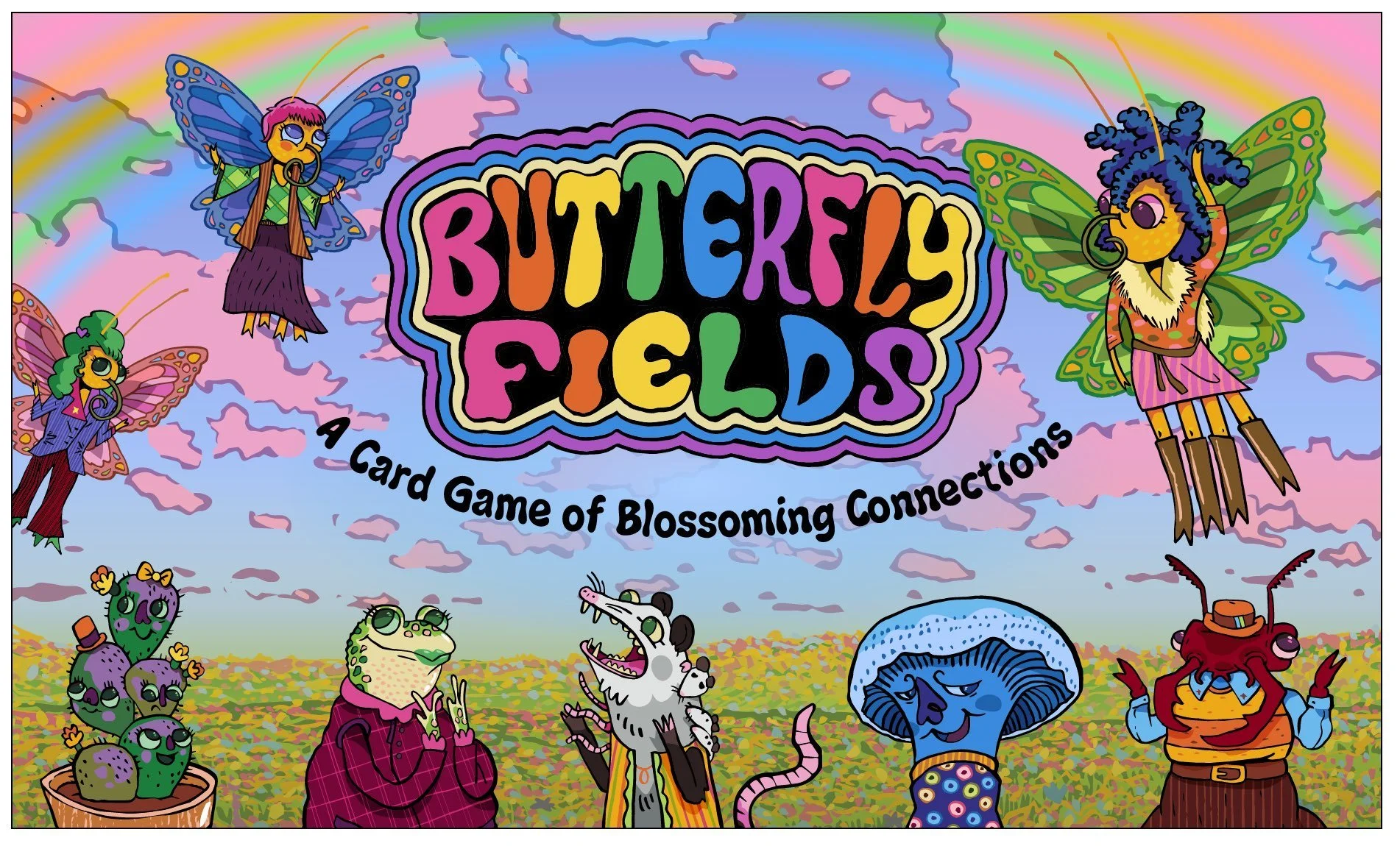
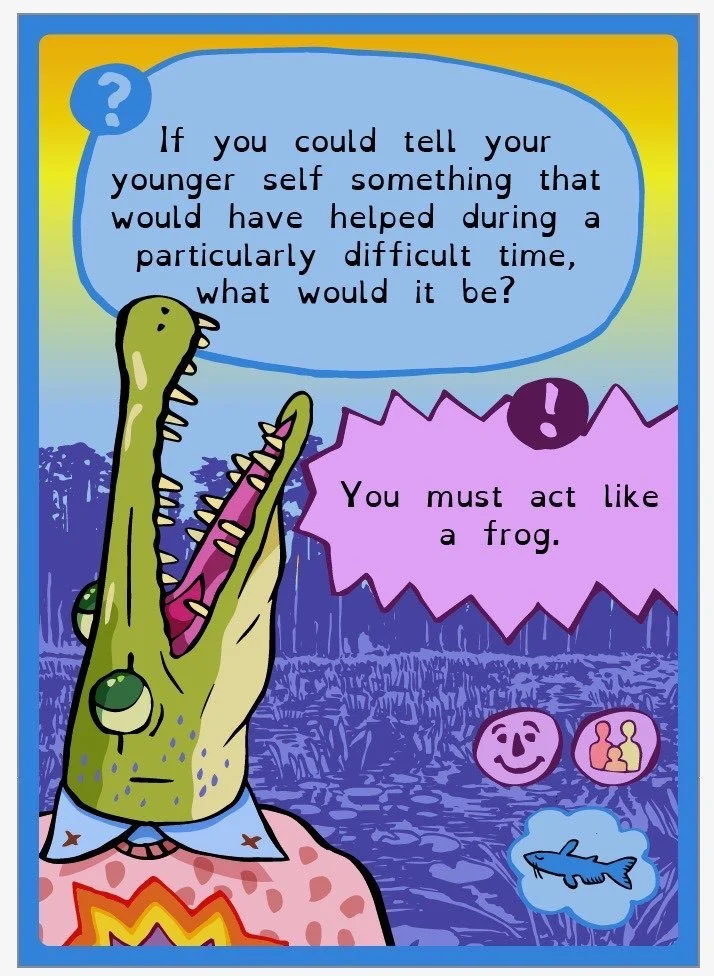
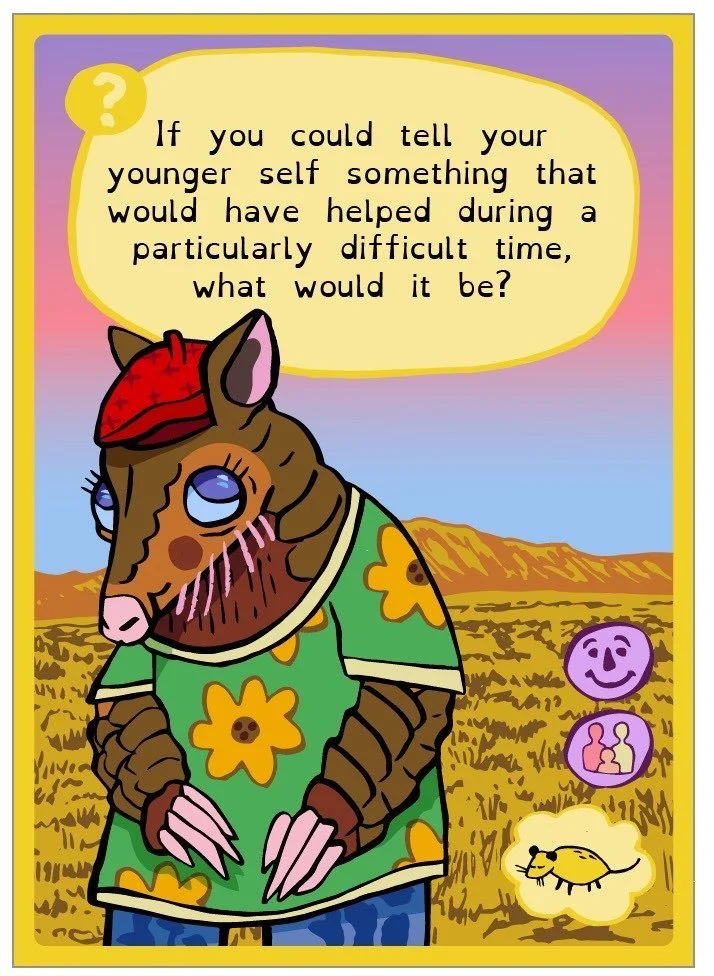
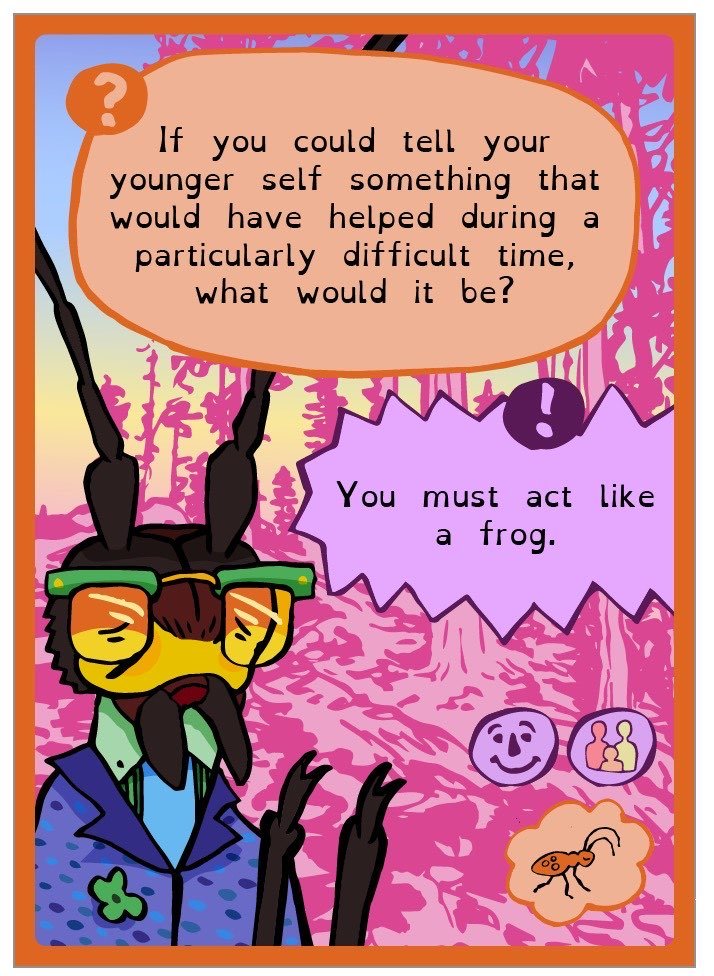
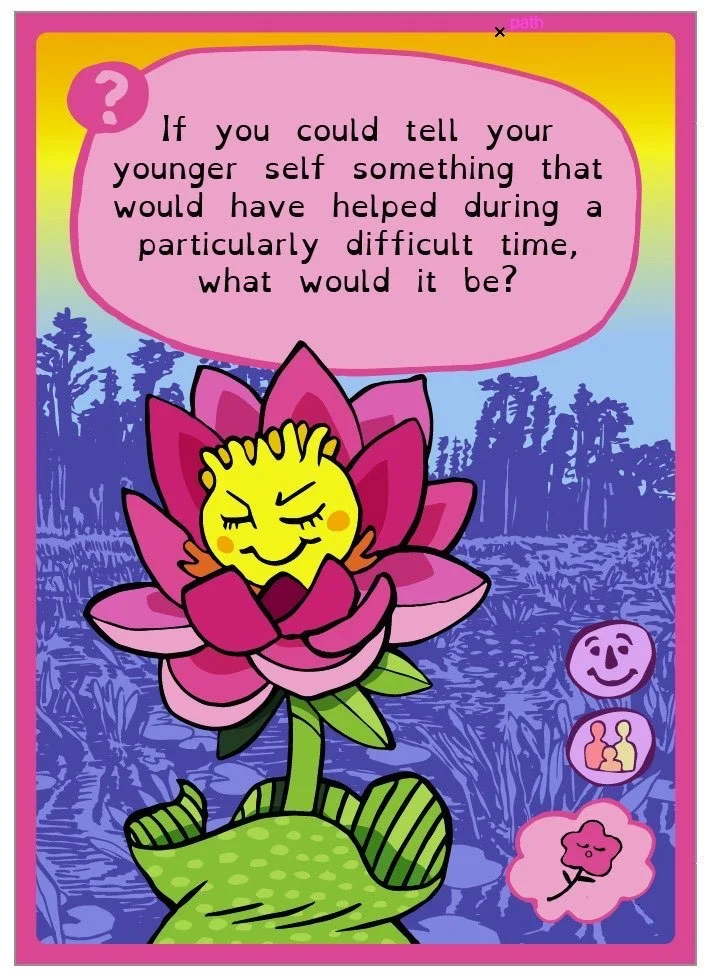
Butterfly Fields, 2024
Mixed media: paper and cardboard, approximately 300 cards
Butterfly Fields is a social party game that presents players with opportunities to be vulnerable and connect while being silly and embodying a sense of play and whimsy. The game can be played in two modes: one for 4-10 players, and the other for 10-60 players. Both versions of Butterfly Fields provide mechanics that allow players to opt into the experience at the level they feel comfortable while always providing handholds to do more and go deeper if they desire. The game is constructed with accessibility from its foundation.
Every card that contains a sensitive topic or requires movement that may be prohibitive to players with different disabilities contain an icon signifying it as such, allowing players to easily filter out what cards they want to play with, ensuring everyone can participate fully in the game.
Butterfly Fields is also a game that invites players to be vulnerable, allowing for deeper connection and self-discovery. Cards deal with relationships to others, ancestors, and land, self-narratives, sensory perceptions of the world, and other topics both personal and often overlooked in casual conversation. Players get to listen to others share and share themselves, and when things feel heavy, the game always provides a gag or silly moment not too far away.
For updates on this project, email rosenbloom.boom@proton.me
Game designer, ex-nonprofit runner, organizer, facilitator, mediator, and technologist committed to building bridges and community, Honey creates games and interactive experiences to explore human and mystical connection. Valuing play and emotion, she hopes to use games as containers for people to more deeply discover themselves, listen and learn from others, and feel the energy of the ineffable infinite that is being. Her experiences with mental illness and disability lead her to creating accessible and gentle experiences where players can opt in as much as they feel comfortable and find a way of interacting that feels good for them.