ANTHROPOLOGY of MOTHERHOOD
Aesthetics of Care
To learn more about the artists, click on their names.
Please note that this virtual gallery is designed to be experienced on a computer or laptop browser.
Emotional Labor, Magazine cutouts, cotton quilting fabric, glue, watercolor paper, 2024
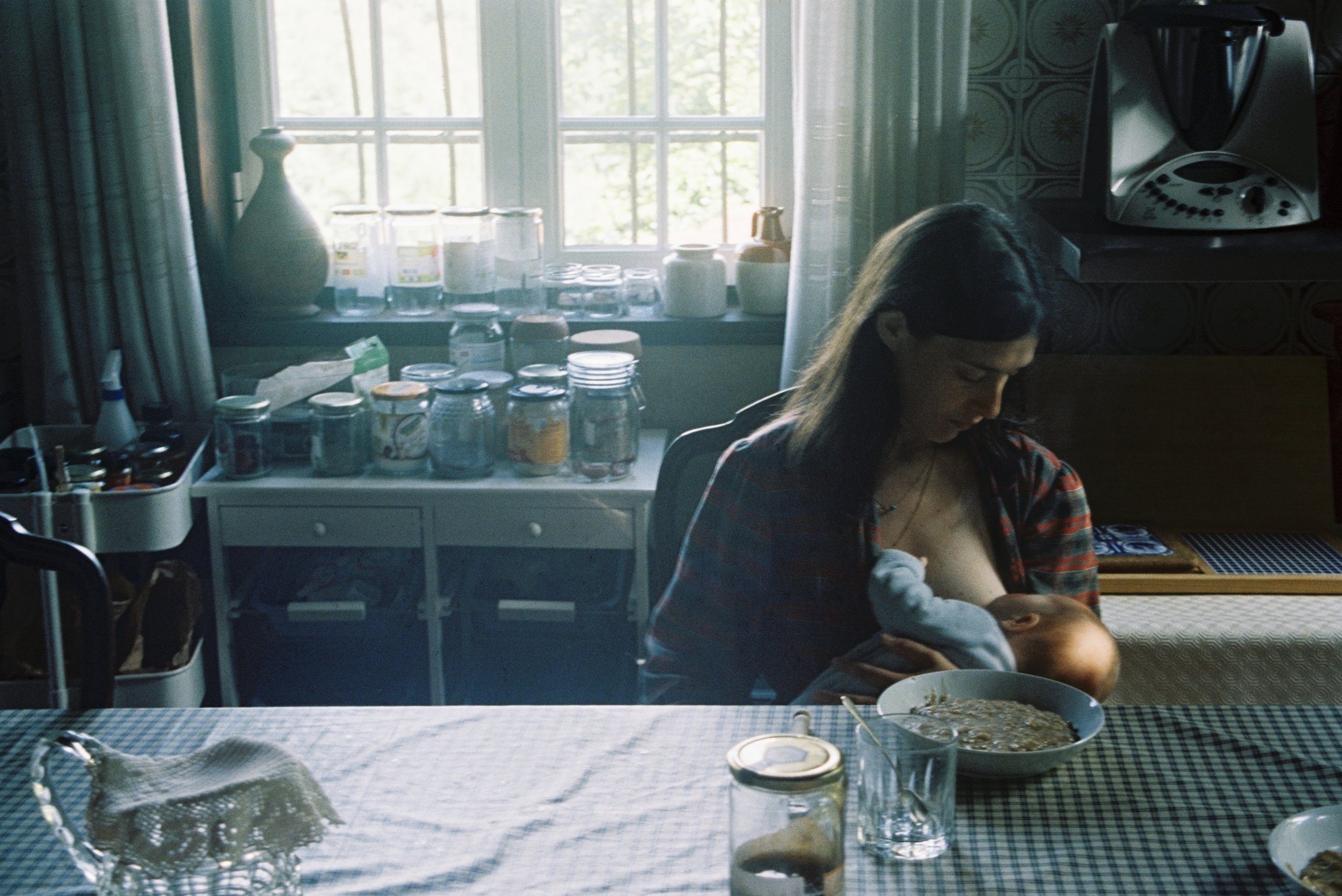
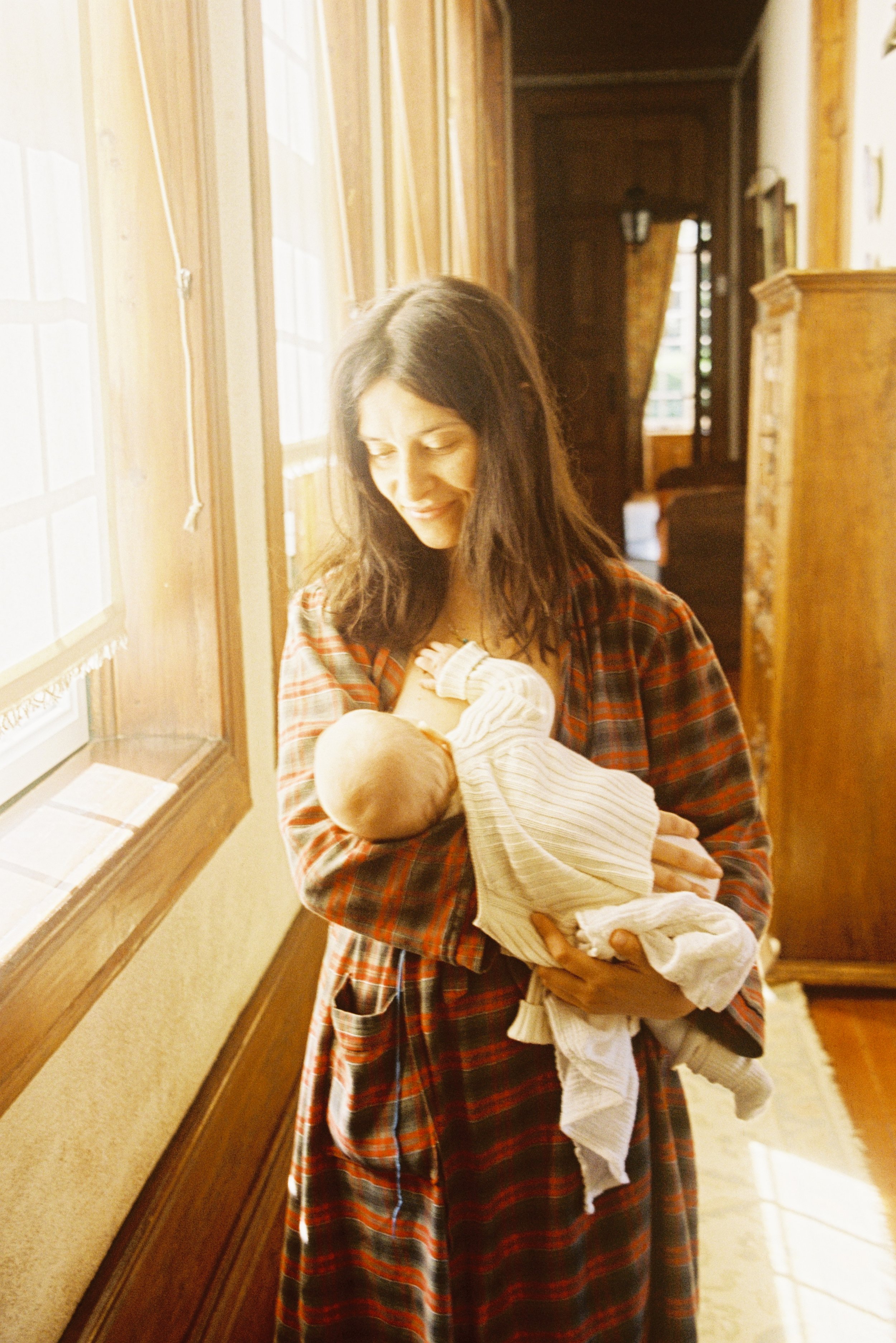
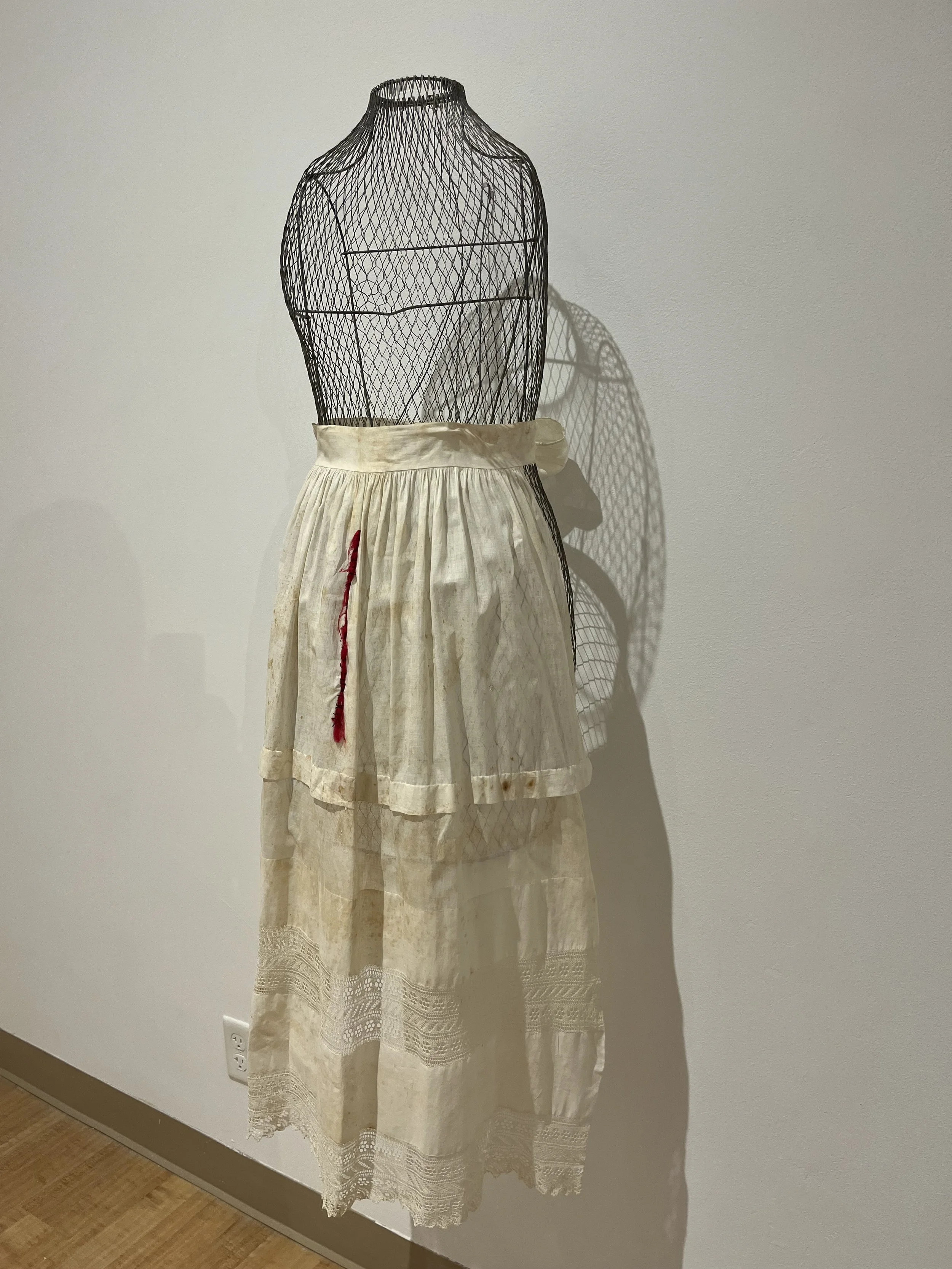
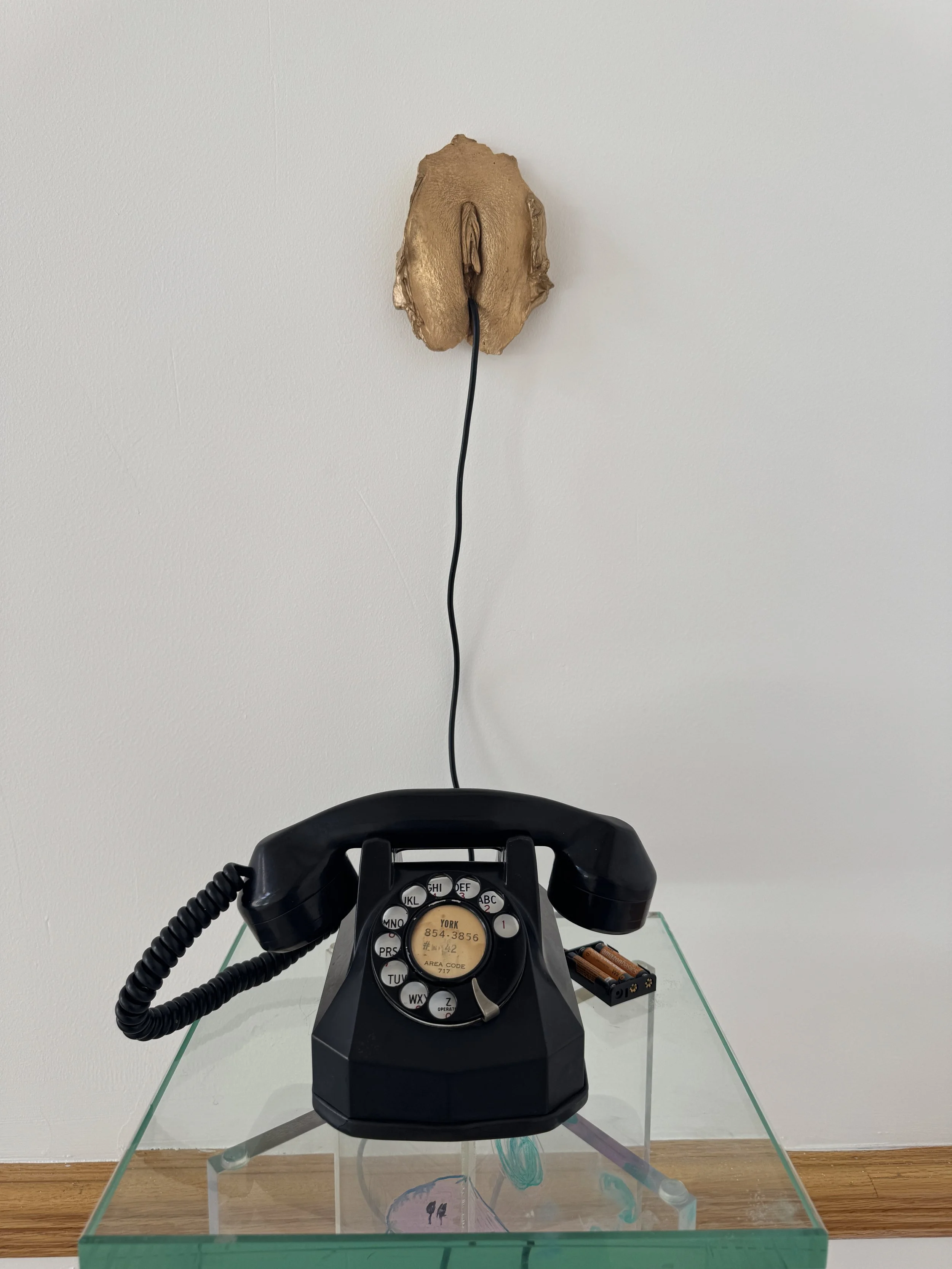
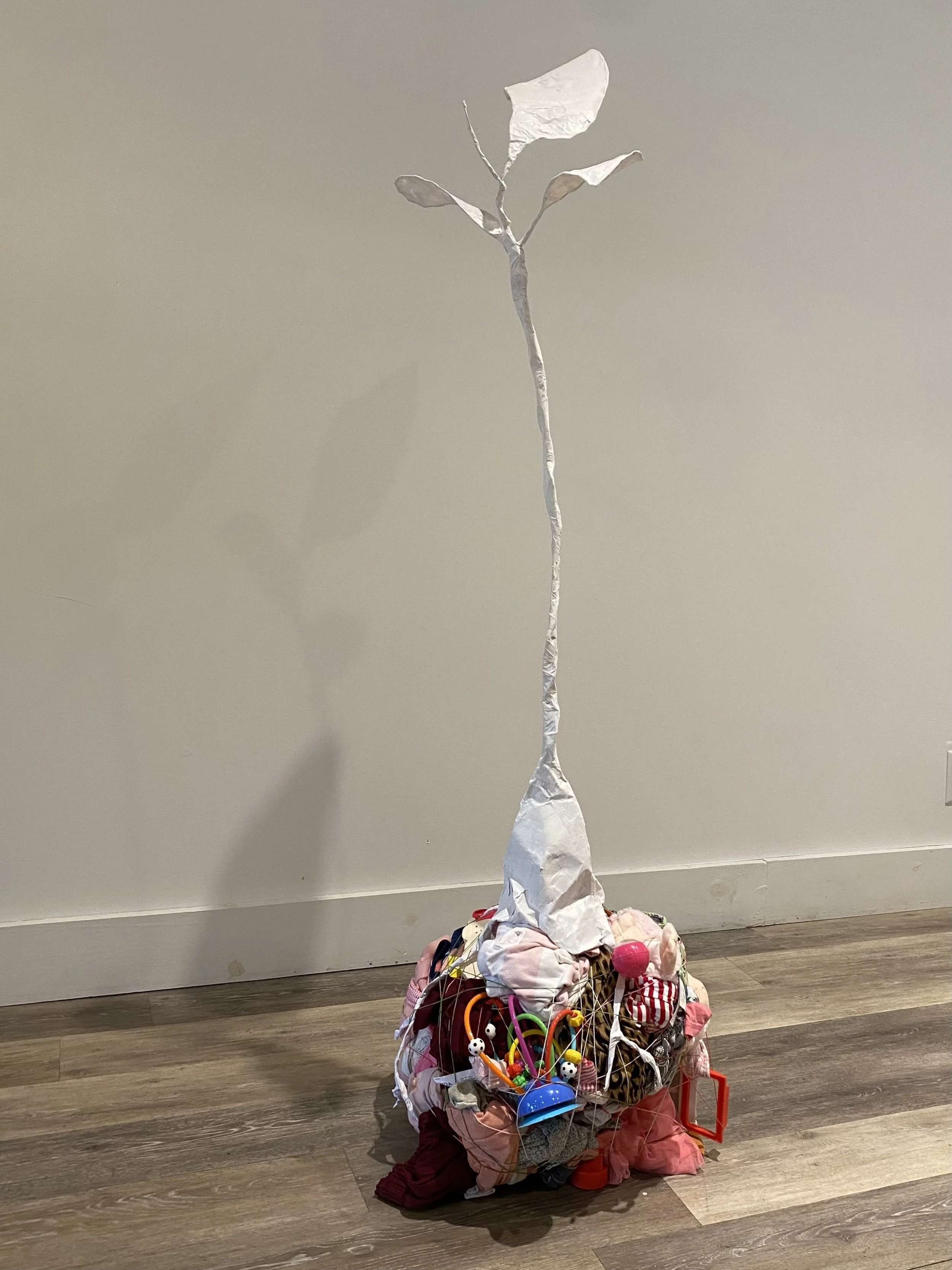
The act of bearing life is inherently creative, inviting meaning-making from the desperation, joy, loss, and love encountered through conception, pregnancy, birth, and postpartum. My artwork explores how caregiving and creative practice inform and inspire each other.
Following a pregnancy loss in 2024, I pivoted from conceptual work to the intuitive medium of collage, visually processing what I couldn’t yet articulate in words. My multidisciplinary practice adapts to the rhythms of caregiving, using materials like postpartum care objects, magazine cutouts, and my grandmother’s fabric stash—portable and “child-safe” for work at the dining table or playground. These materials not only reflect the constraints of caregiving but embody its messages: cutting and weaving postpartum underwear into soft sculptures like baskets and pillows signifies the dual need to nurture both our vulnerable and powerful selves. Through quilting techniques and fabric, I honor the artistic legacy of mothers before me, including my grandmothers—avid makers who, like many women of their time, never called themselves artists.
My work documents my bodily experiences while questioning how communities care for maternal bodies amid the profound physical and emotional transformations of motherhood.
Hannah Colen
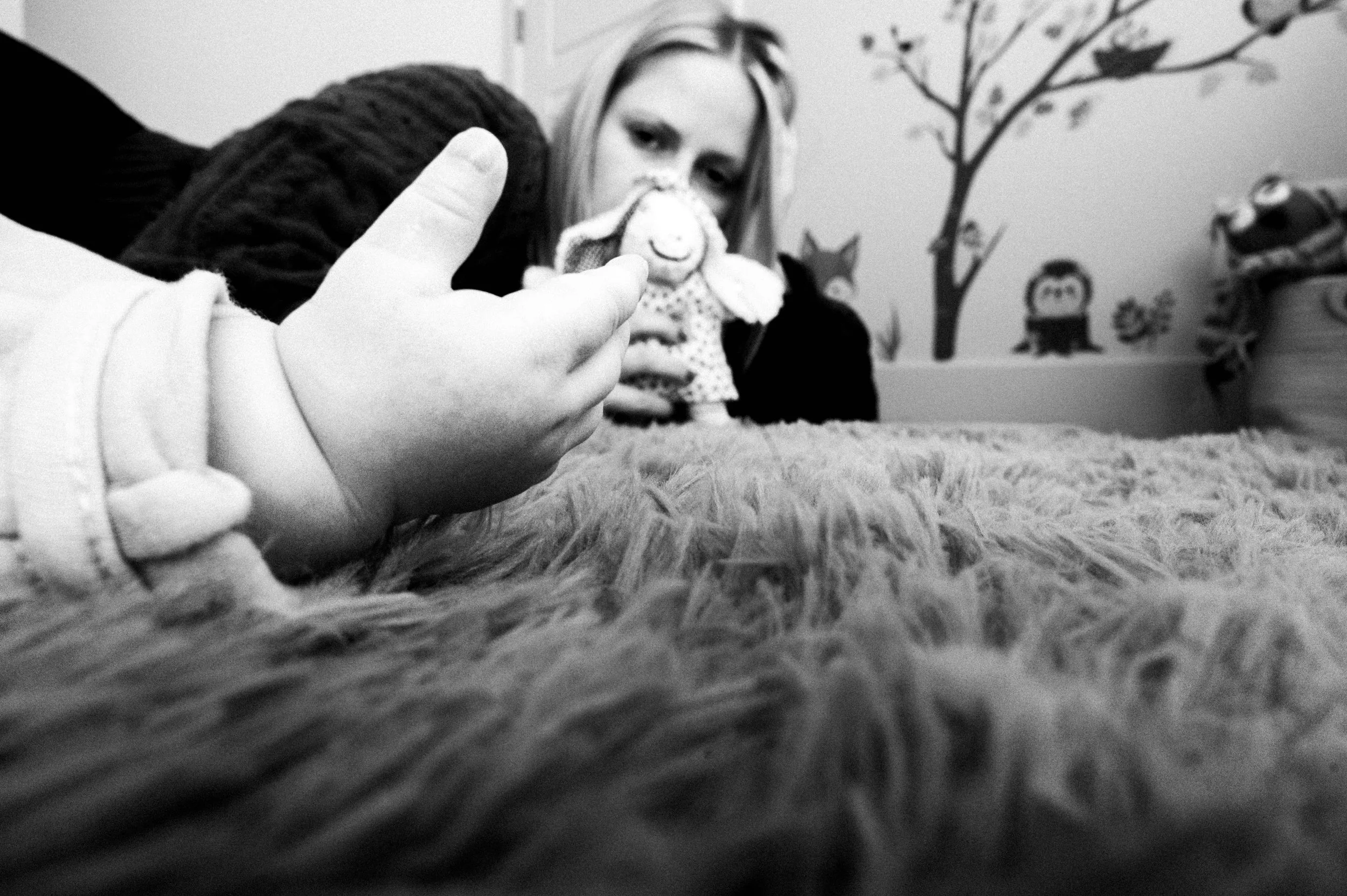
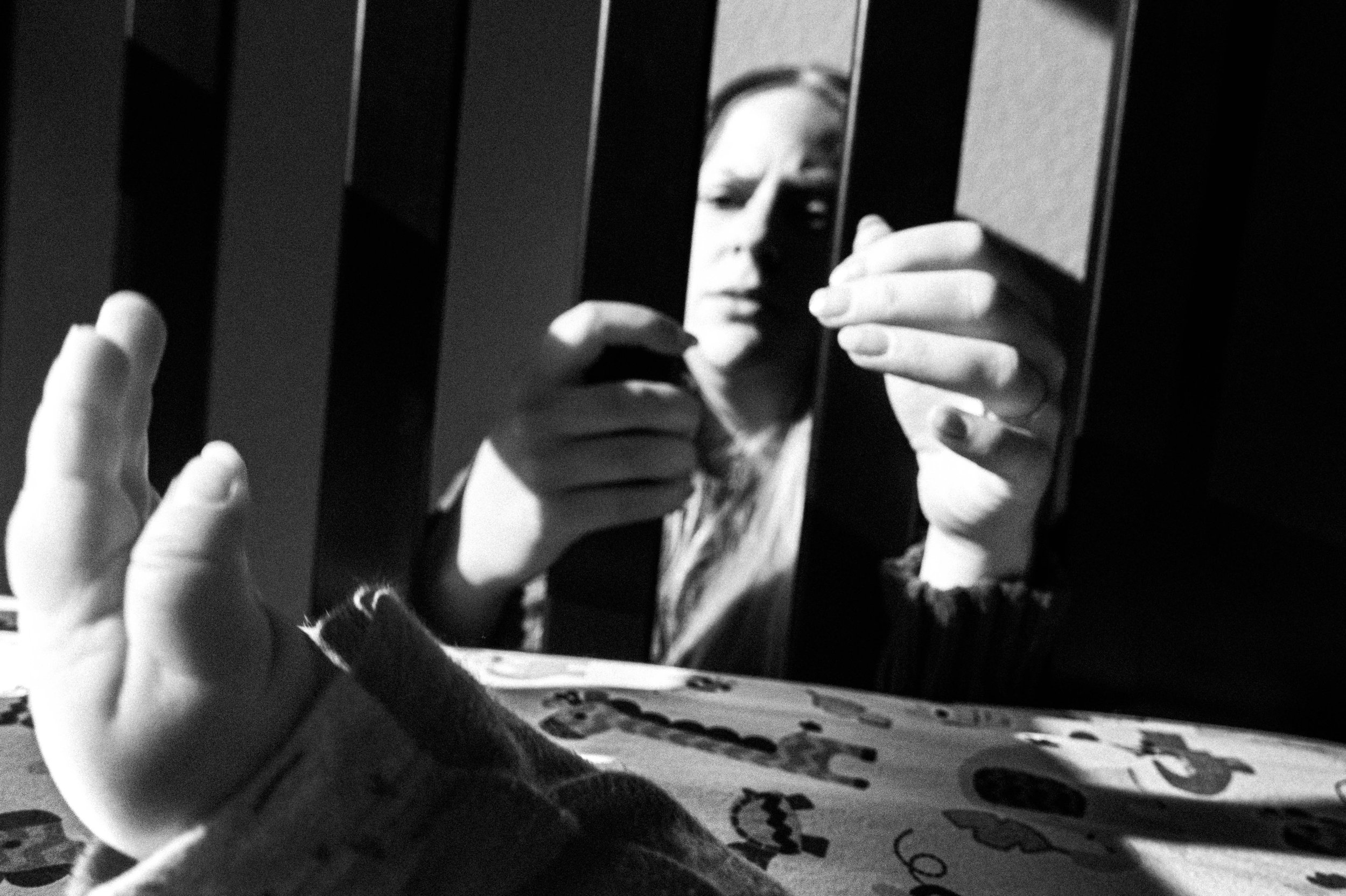
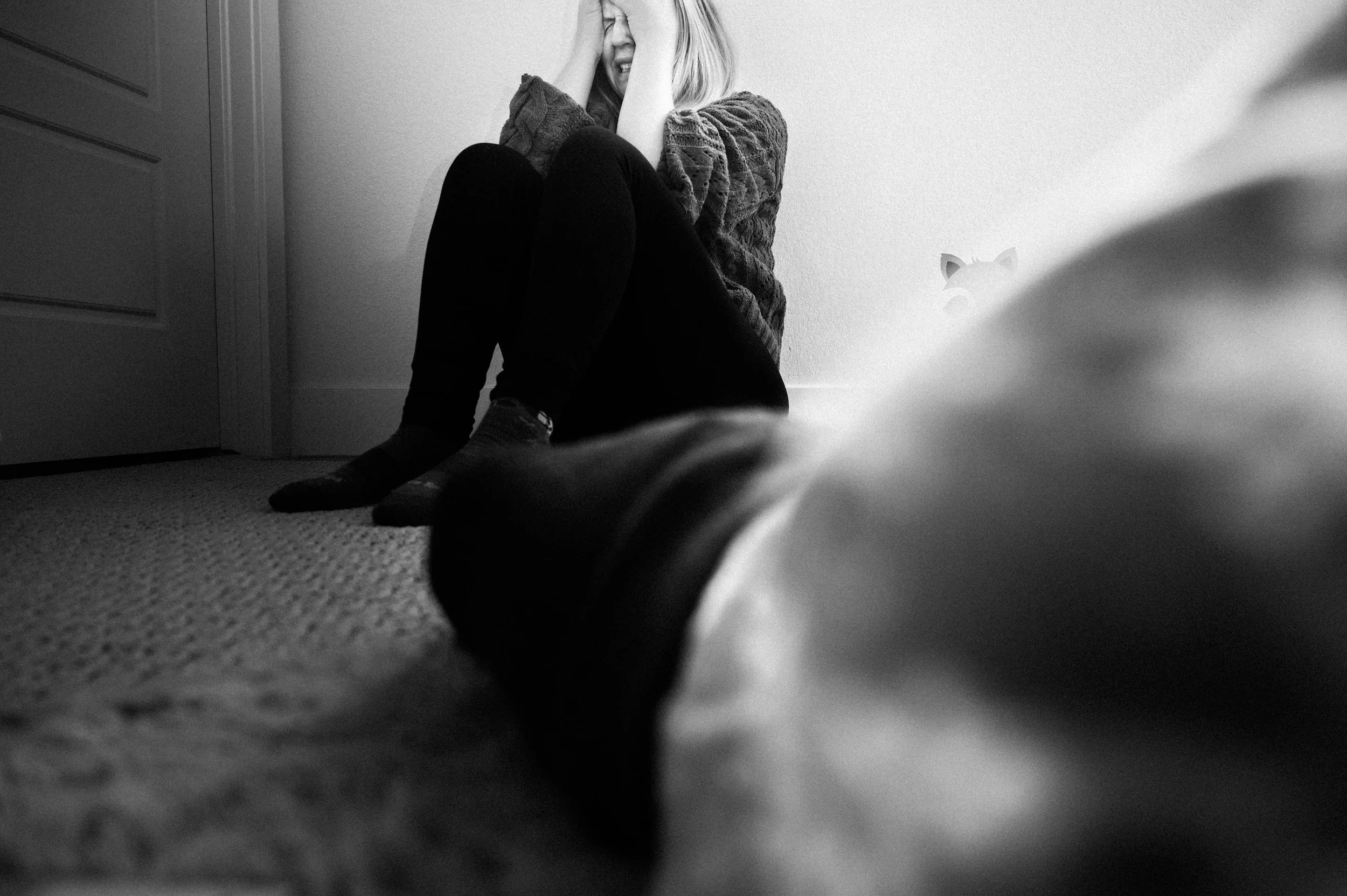
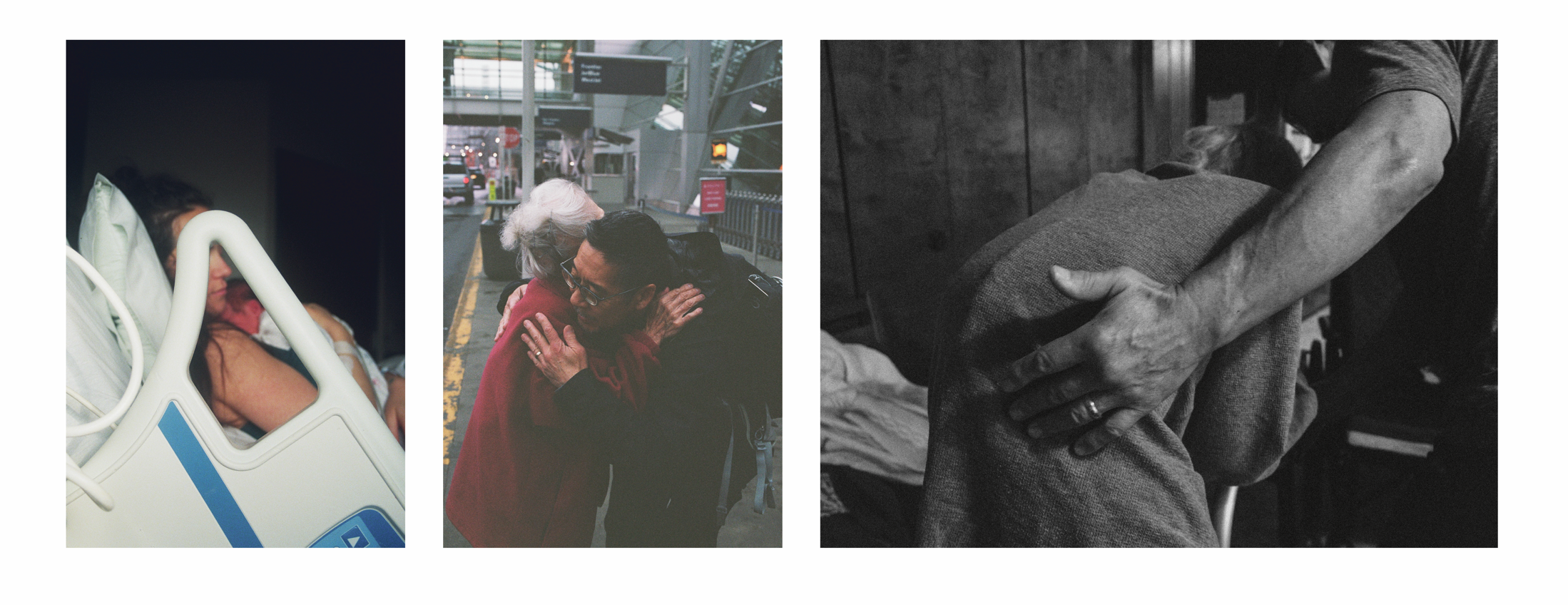
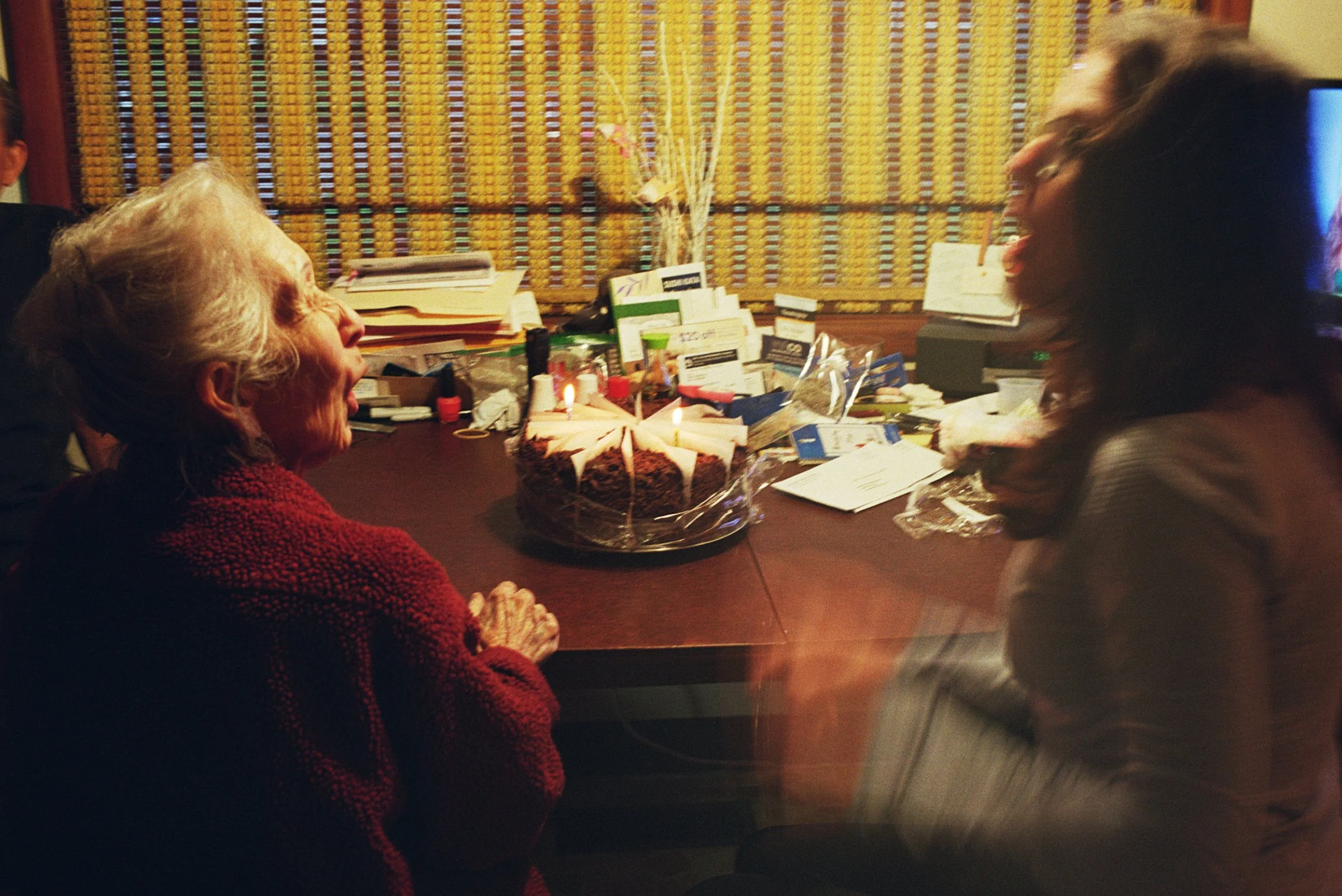
two angels, Photography, 2025
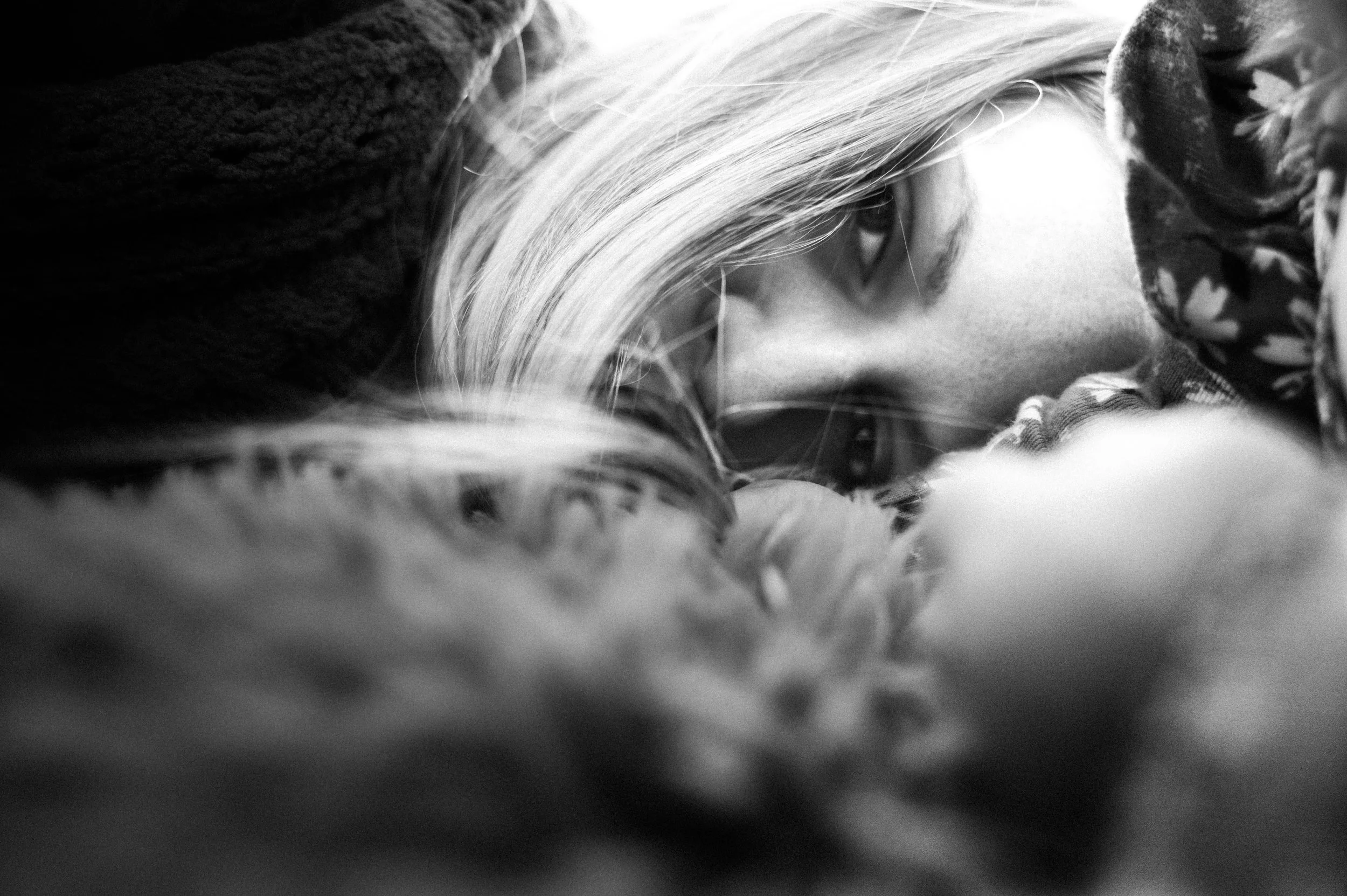
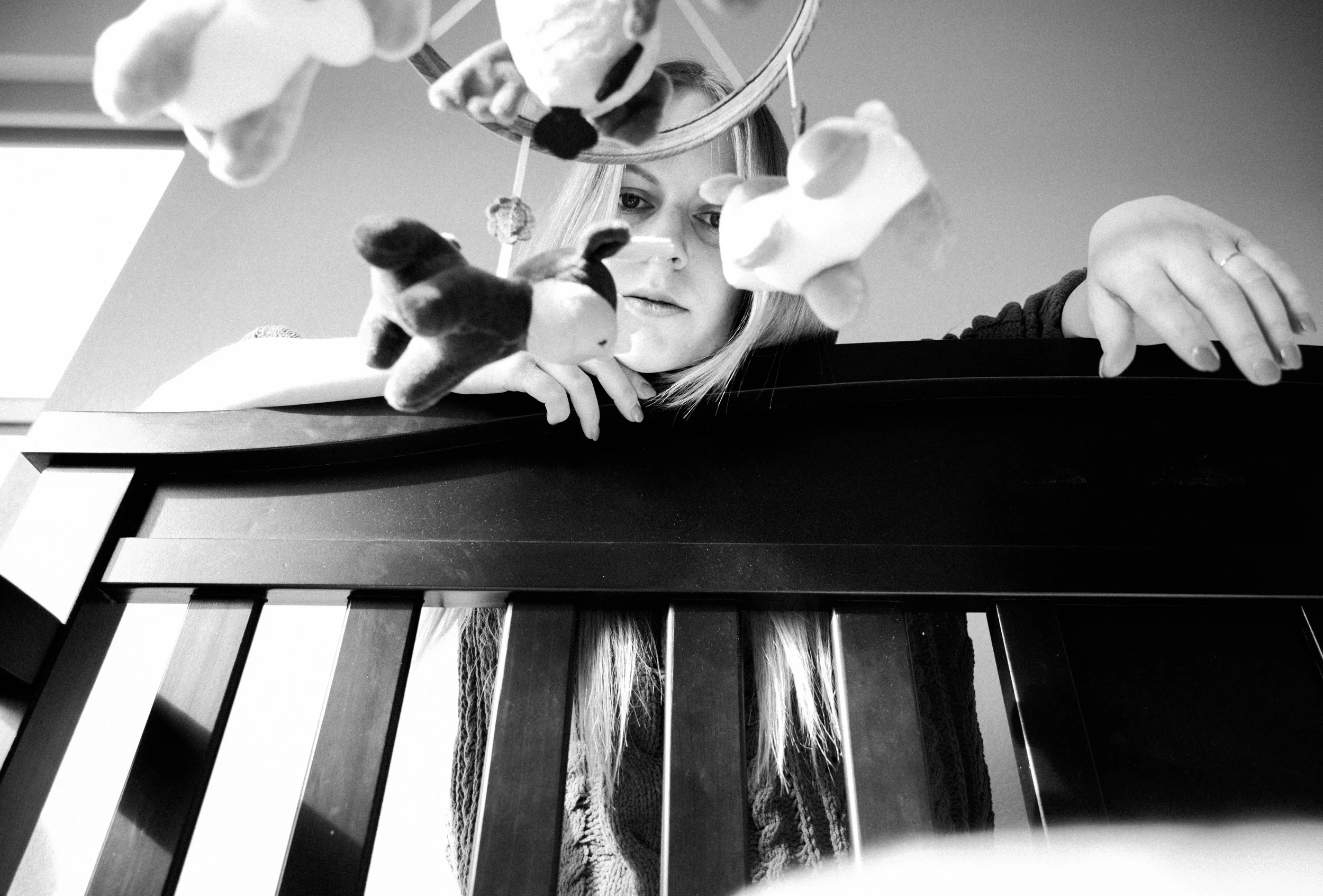
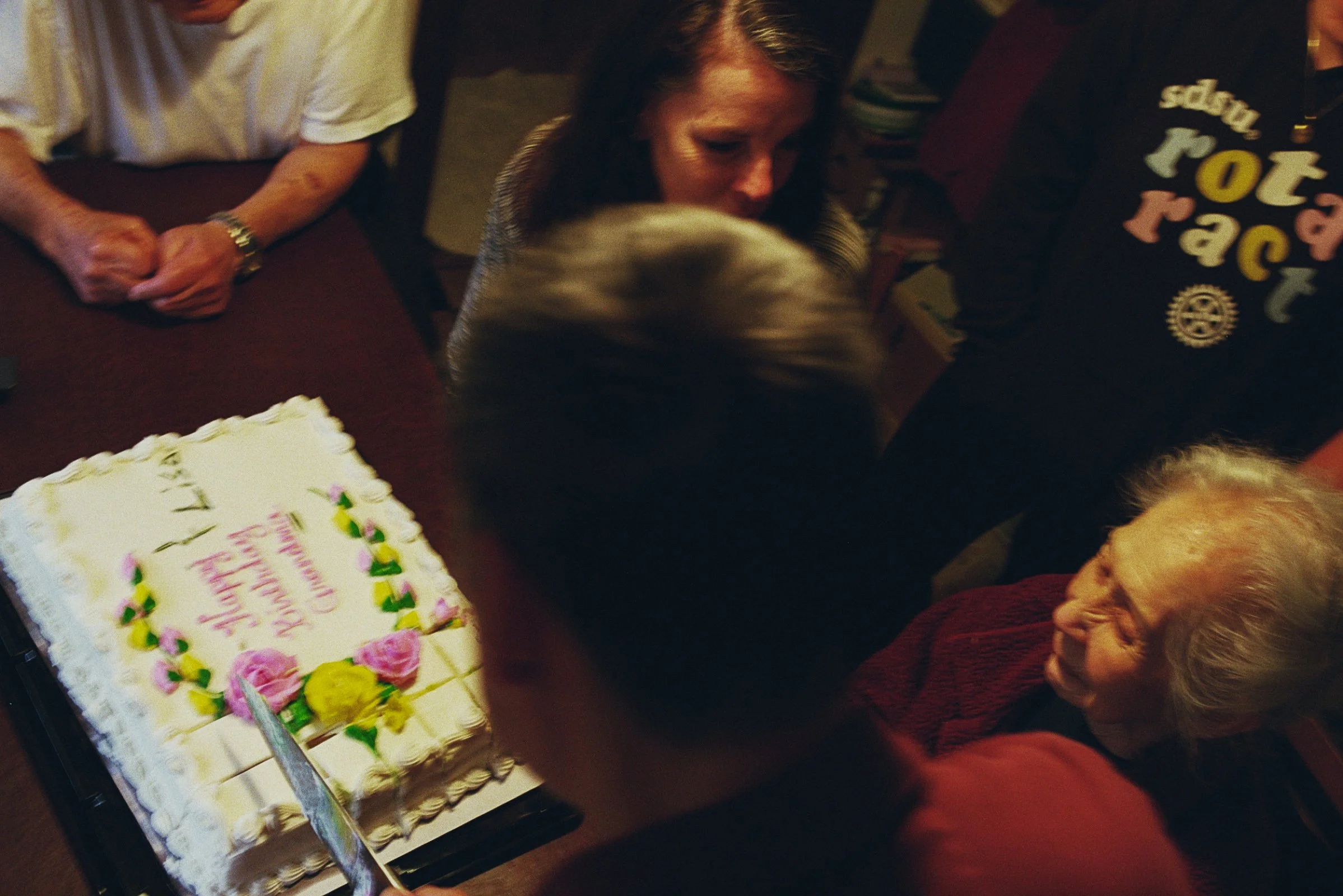
After a Lunar New Year dinner together, we talked about how seeing each other felt like finally exhaling after holding our breath too long. Over shared food and conversation, there was comfort in being understood without needing to explain.
Sitting in a shared stillness; intertwined. There was ease in the way we were able to hold one another.
Adair Heitmann
I Stand Before You Today, Watercolor painting, 5 x 7 inches, 2003.
Art served as an act of healing and connection between myself and our young son in 2003 after my right breast was removed to cure the breast cancer in it. I didn’t want a reconstructed breast. Surgical implants couldn’t replicate the natural beauty of my former, fabulous breast.
One morning, our then, five-year-old son, Aren, wanted to paint with me. We settled in, around our kitchen table, with our individual watercolors, brushes, and paper. Aren spontaneously says to me, “Mommy, will you paint me a picture of a woman who has lost her breast?” Without premeditation, I created this painting. Seeing it, our young son said, “She looks like you.”
My husband and I had been honest with our curious, sensitive child. We did not follow cultural norms of hiding my medical realities from our son. We shared them in age-appropriate ways. We followed our holistic understanding of disease, identity, transformation, and recovery.
As a mother, of course, I would paint what our son asked. The act of creating the artistic expression, that bubbled up unplanned brought me great solace.
Our young son had the self-awareness to ask the question, I had the courage to respond. For our five-year-old son to acknowledge the watercolor painting with such poise demonstrates the intersection of art and love.